What private label yarn means for a small brand
Private label yarn means selling yarn under your own brand name instead of reselling a supplier’s standard label. For a small shop or emerging custom yarn brand, this is often the simplest way to launch a branded line without building a yarn from zero.
In practical terms, there are two very different starting points. The first is buying ready-stock yarn and selling it as-is. The second is taking an existing yarn style and adding your own label, or moving further into color, weight, length or composition changes if your order plan supports it.
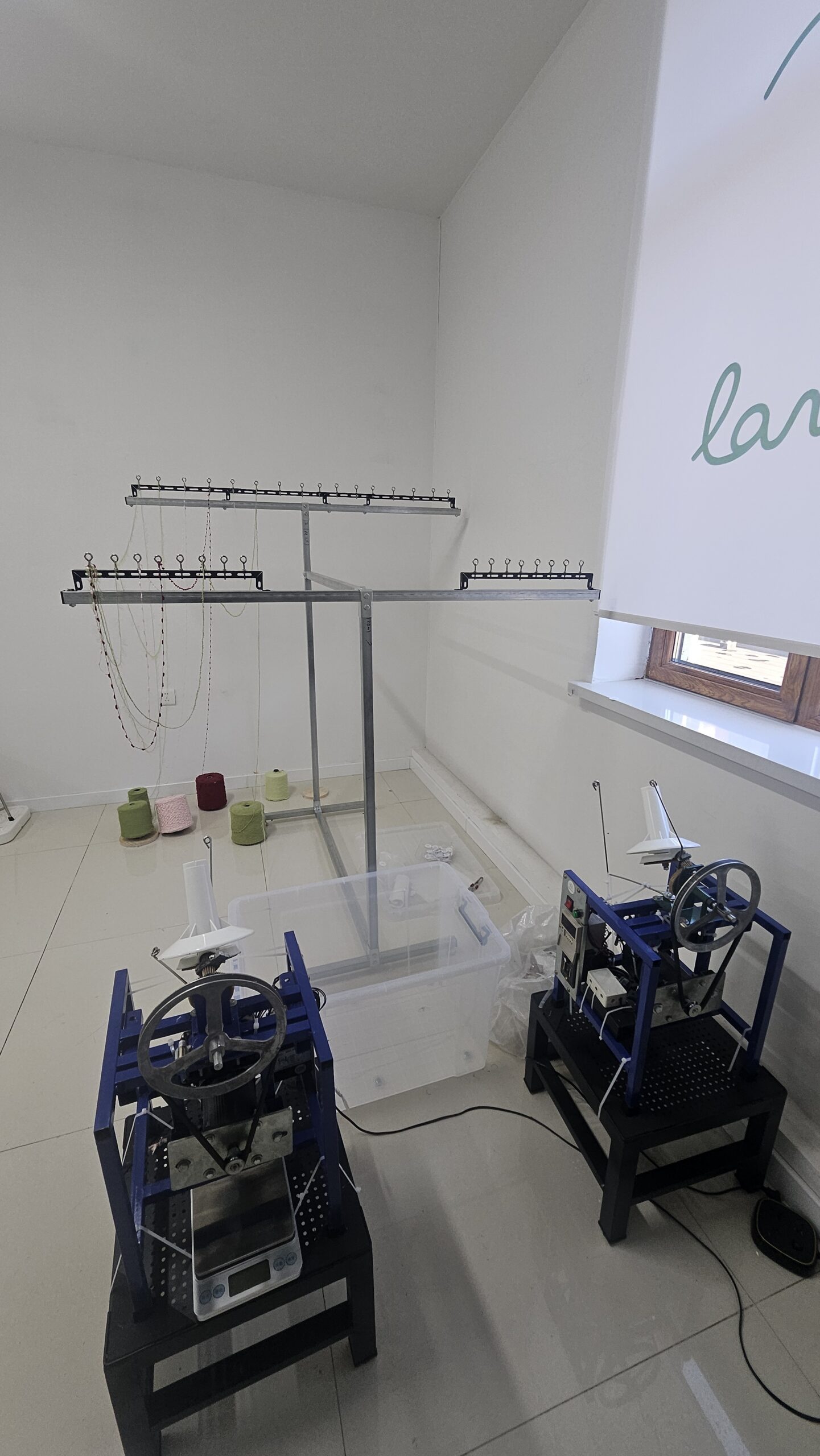
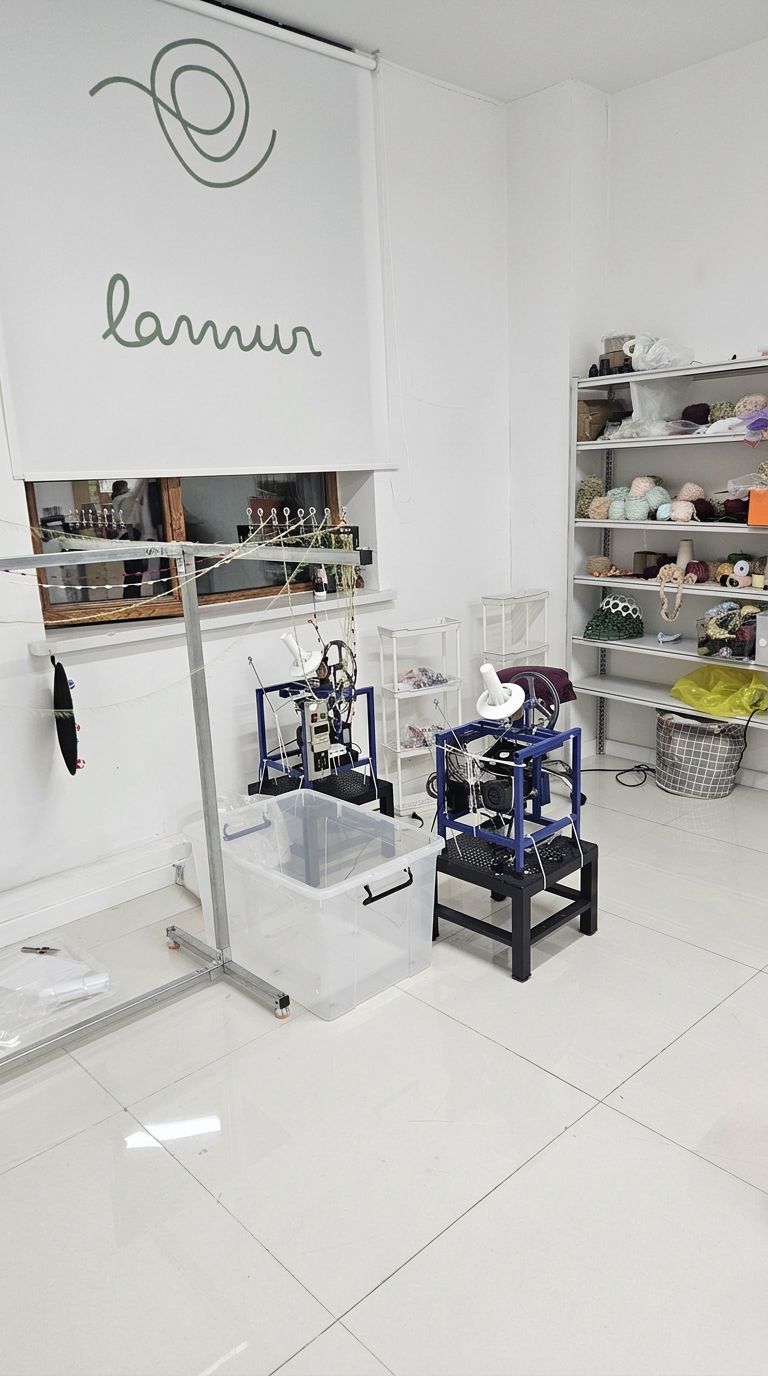
For many small businesses, private label works best when the product itself is already proven. At Lamur Yarn, our focus is fancy bouclé yarn twisted in-house in our mini-factory in Suifenhe, China, with bouclé loops, a mohair-type halo and contrast knots. If you want to understand this structure first, see our guide to bouclé yarn loops, halo and knots.
The key question is not only whether you want your logo on the ball tag. It is whether your current sales volume, budget and collection plan fit a private label launch. A realistic plan starts with the easiest route and adds customization only where it matters.
Choose your starting point: stock styles or custom development
The simplest launch path is to start with stock fancy bouclé yarn and add your own brand label. This lets you test customer response to your branding, packaging and merchandising without changing the yarn structure itself.
If you are still choosing the right base yarn, review the current bouclé yarn product catalog. Stock styles differ in meterage, ply and visual effect. For example, some styles are shorter and fuller, while others have more length per ball and a lighter feel.
A practical small-brand path often looks like this:
- Choose one or two stock styles.
- Test them as samples or in a small stock order.
- Move to yarn with your own label once the style is clear.
- Add color matching or technical changes only after you know what sells.
If you need more than a label change, custom development can include:
- Pantone color matching for a brand-specific shade
- Custom ball length or weight to fit your positioning
- Composition adjustment for larger orders
These options do not all require the same commitment. That matters, because many new brands assume “custom” is one package. It is not. A stock style with your own logo is a much lighter starting point than a fully adjusted specification.
Our current bouclé catalog includes polyester/acrylic blends, typically 130 g ± 2 g balls, and custom ball weight is possible on suitable wholesale orders. Composition can also be adjusted for custom programs. The best route depends on whether your main priority is fast testing, visual brand identity or a more distinct product specification.
Know the MOQ before you plan your collection
MOQ is where many collection plans become either realistic or too ambitious. Before you design labels or build a launch calendar, match your idea to the right minimum.
Here are the relevant wholesale minimums at Lamur Yarn:
- Stock trial order: 10 balls
- Private label: 1,000 balls
- Pantone color: 1,000 balls
- Custom length or weight: 500 balls
- Custom composition: 4,000 balls
These minimums show why it helps to separate branding from product development. If your goal is to launch a branded line quickly, private label on stock styles is usually easier to plan than changing several technical details at once.
For example, a small shop may be ready for a branded tag but not yet ready for a custom composition order. Another buyer may want a standard ball tag first, then later move into Pantone matching once reorder volume becomes more predictable.
It also helps to think in collection terms. A single style in one color direction is easier to manage than multiple styles with several simultaneous customizations. Fewer variables make forecasting simpler and reduce the chance of over-ordering before you know what your customers will buy again.
Prepare your label, product details and brand assets
Once your yarn plan is set, the next step is preparing the information that will go on the product and around it. A private label order runs more smoothly when the brand assets are ready before production starts.
At minimum, prepare these items:
- Logo file in a clear production-ready format
- Brand name as it should appear on the ball tag
- Product name for each yarn style or colorway
- Composition to be printed on the label
- Ball weight and length information
- Usage notes such as suitable project types
- Visual direction for tag style, tone and look
For bouclé yarn, clarity matters more than decoration. Your customer should be able to identify the fiber blend, ball size and intended uses quickly. Common applications for our fancy yarn include bags, pet clothing, accessories, cardigans, blankets, home decor, planters and slippers.
It is also worth deciding how much consistency you want across the full line. Some brands use one label format for every style. Others keep the same logo and structure but vary product naming and visuals by collection. Neither is wrong, but it is easier to manage if the system is decided early.
If you need support materials for launch, we provide partners with product information, photos, renders and finished-work examples. That can help when you are preparing product pages, wholesale sheets or early social content for a new custom yarn brand.
Understand production checks, dispatch and shipping terms
Before shipment, we check each order for weight, color and composition, and we carry out manual twist inspection. Length tolerance is controlled within ±2%. If you want more background on how we approach this, see our article on yarn quality control in our mini-factory.
Dispatch timing depends on whether you order stock or custom. Stock colors ship from our warehouse within 5 days. Custom orders ship within 25 days.
Transit time depends on the route and the agreed Incoterms, so we quote it with each order rather than treating it as a fixed figure. For wholesale shipping, we work with EXW, FOB and DDP terms. In simple terms:
- EXW: you arrange pickup and the onward logistics from our side
- FOB: the goods are prepared for export through the agreed port
- DDP: shipping is arranged through to the named destination under the agreed terms
Available export ports include Suifenhe, Dalian and Shanghai. Our Suifenhe location supports rail and sea export routes toward Europe and North America, which can be useful when planning different shipping options.
For packing, wholesale yarn is packed at 120 balls per export carton, with cartons palletized for sea freight. Payment terms are T/T, with 50% deposit and 50% before shipment. None of these details are difficult on their own, but they are easier to handle when discussed before artwork and production begin.
Start with samples or a small trial to reduce risk
The lowest-risk way to launch is to test the yarn first. We offer free samples of stock styles, with shipping paid by the buyer. This is usually the best first step if you are comparing texture, loop structure, halo, density or overall hand feel.
If the style looks right, a small stock trial order can tell you more than a long planning discussion. You can photograph it, knit or crochet swatches, test how it fits your shop’s brand and learn which applications interest your audience most.
Only after that should many small brands move into full private label yarn. Starting small helps you answer practical questions: which style works best, whether your customers prefer fuller or longer meterage, what projects they ask for and whether your label design is communicating the right value.
This step-by-step path is often more useful than trying to customize everything in the first round. It keeps the launch manageable and gives you real product feedback before committing to larger branded orders.
If you want to discuss options, you can review our private label and OEM yarn services or contact us through the wholesale contact page. If you are here as a knitter or crocheter rather than a shop owner, you can also explore the retail collection and try a ball or two first.
FAQ
What is the MOQ for private label yarn?
The MOQ for private label is 1,000 balls. If you only want to test stock yarn first, the trial order minimum for stock is 10 balls.
Can I order yarn with my own label on stock colorways?
Yes. This is one of the simplest launch paths for a small brand. You choose a stock style and stock colorway, then add your own logo on the ball tag for a private label order.
Can you match a custom color for my yarn brand?
Yes. Pantone color matching is available for custom orders, with an MOQ of 1,000 balls. This option is useful if you want a color that is specific to your brand rather than using a stock colorway.
Do you provide samples before I place a larger order?
Yes. We provide free samples of stock styles, and the buyer pays shipping only. Many small brands start with samples or a small stock trial before moving into a larger private label program.
If you mainly want to try the yarn for your own projects, visit our retail yarn shop. We ship worldwide, and you can start with a ball or two. If you have questions about wholesale, samples or a private label launch, write to us and we will help you choose the most practical starting point.